


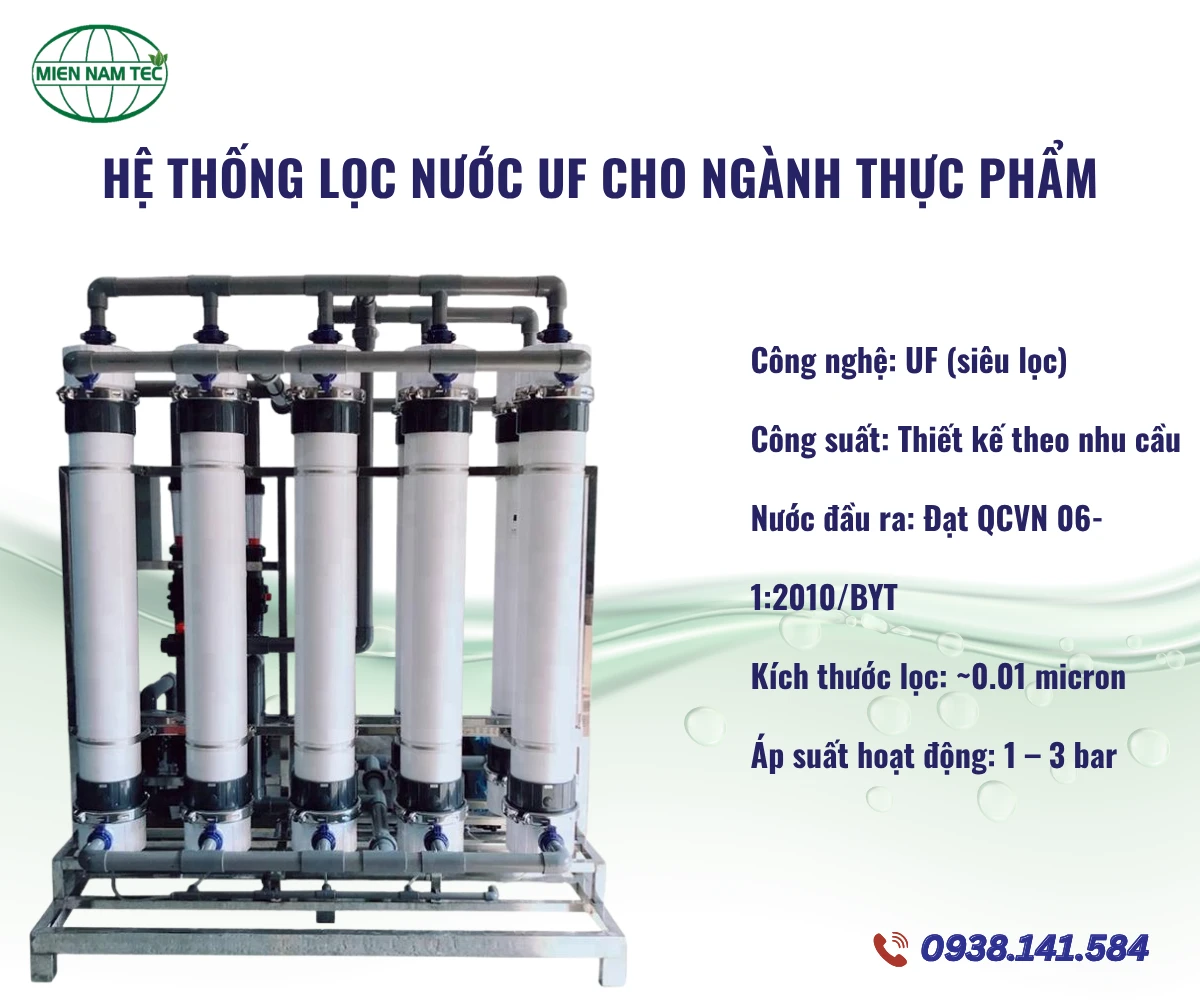
UF (Ultrafiltration) Water Filtration Systems
Amid increasingly polluted water sources, UF (Ultrafiltration) water filtration systems have emerged as an advanced technology that strictly meets standards for domestic and industrial water. At MIEN NAM FILTER CO., LTD, we provide optimal UF (ultrafiltration) system solutions that thoroughly remove bacteria, viruses, and impurities without using chemicals. The article below provides an expert, in-depth look at the structure, principle, and important notes when installing this technology.
A UF (Ultra Filtration) water filtration system is a modern technology that uses osmotic hollow fiber membranes. These membrane fibers are made from high-grade polymer materials, most commonly PVDF, thanks to its good chemical resistance and extremely high mechanical strength. In addition, materials such as PES, PAN, or PVC are also used depending on the nature of the water source and the investment budget.
The core difference of the UF system lies in its ultra-small pore size, ranging from 0.01 to 0.1 micron, and operating at low pressure of only 1.5 – 4.0 bar. The UF system helps completely remove bacteria, viruses, parasites; large organic compounds; sediment, rust, and suspended impurities, while significantly reducing power consumption compared to other membrane filtration technologies.
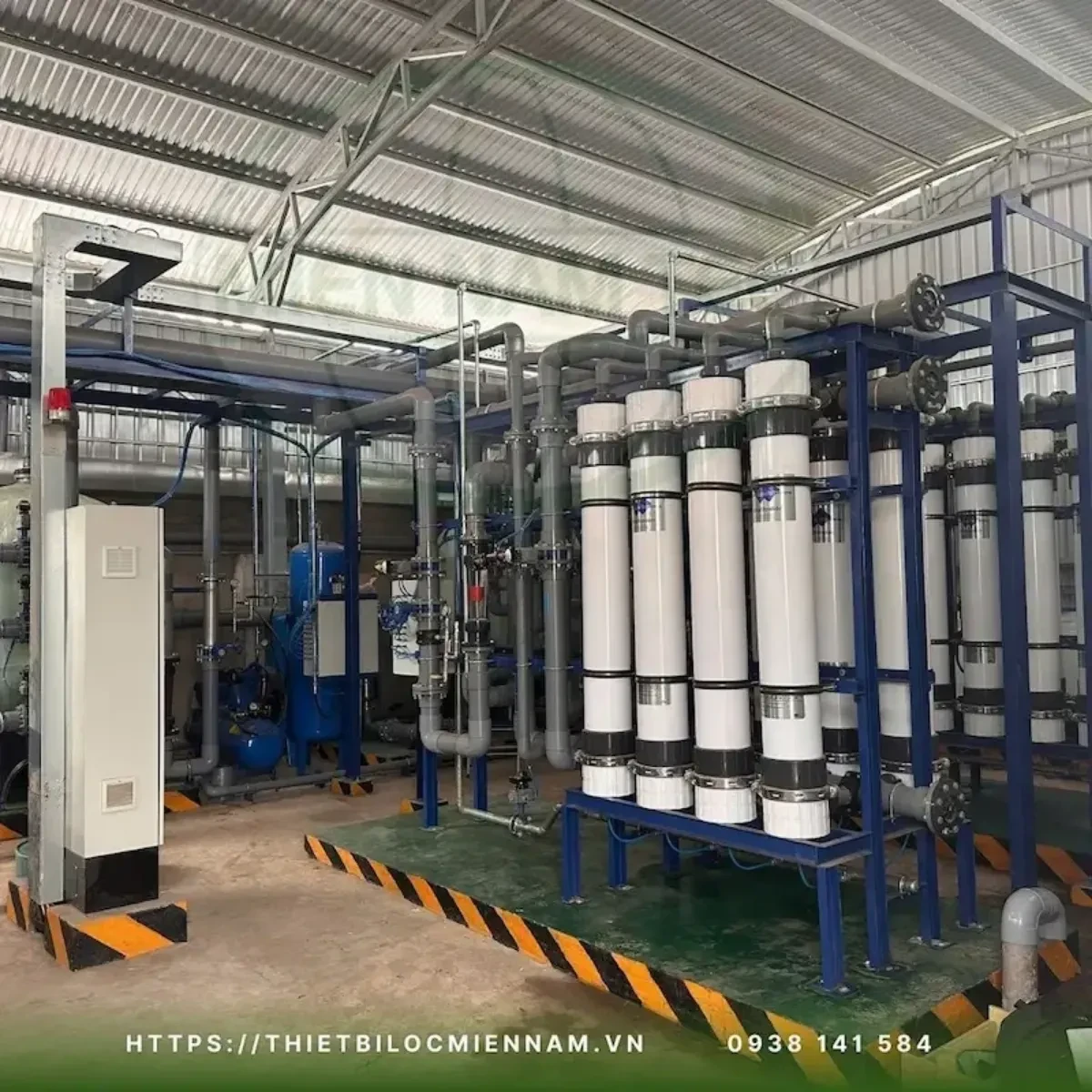
What is UF filtration technology?
Understanding the advantages and disadvantages helps investors and users make the most accurate decision for their needs.
Using a UF water filtration system brings outstanding benefits that few other technologies can fully replace:
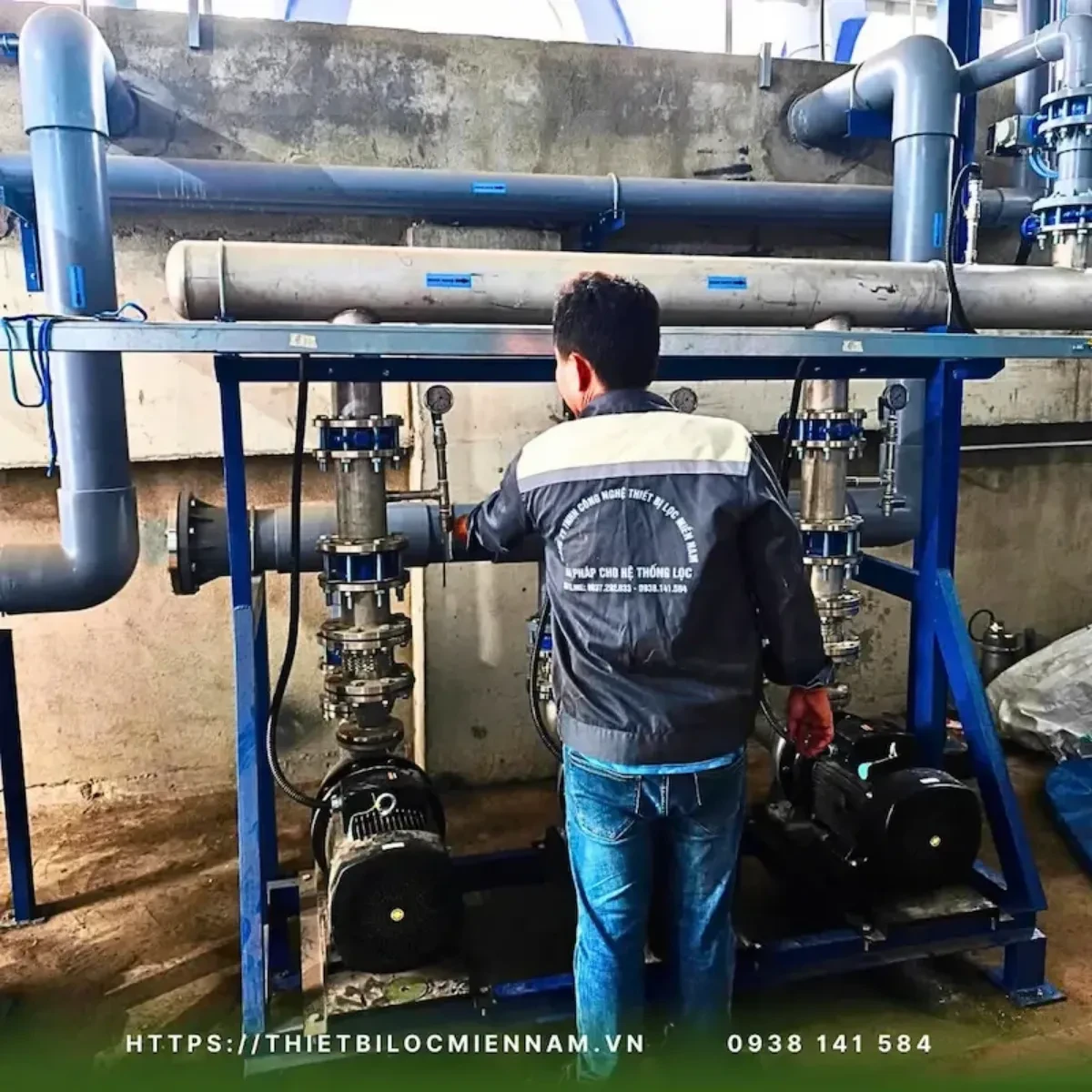
Advantages of the UF filtration system
Despite many advantages, the UF system also has certain technical limitations:
Does not remove dissolved solids and heavy metal ions: The UF membrane's pore size is large enough for metal ions (such as Arsenic, Lead, Mercury) and dissolved salts (Sodium, Chloride) to pass through. Therefore, this system cannot desalinate salt water or completely remove water hardness.
Does not remove small dissolved chemicals: Volatile organic compounds (VOCs), residual chlorine, and pesticides, if fully dissolved in water, will not be retained by the UF membrane.
Strict requirements for input water source: If the water is too polluted, the UF membrane will quickly become fouled. This technology needs a supporting pre-treatment system when dealing with the following water sources:
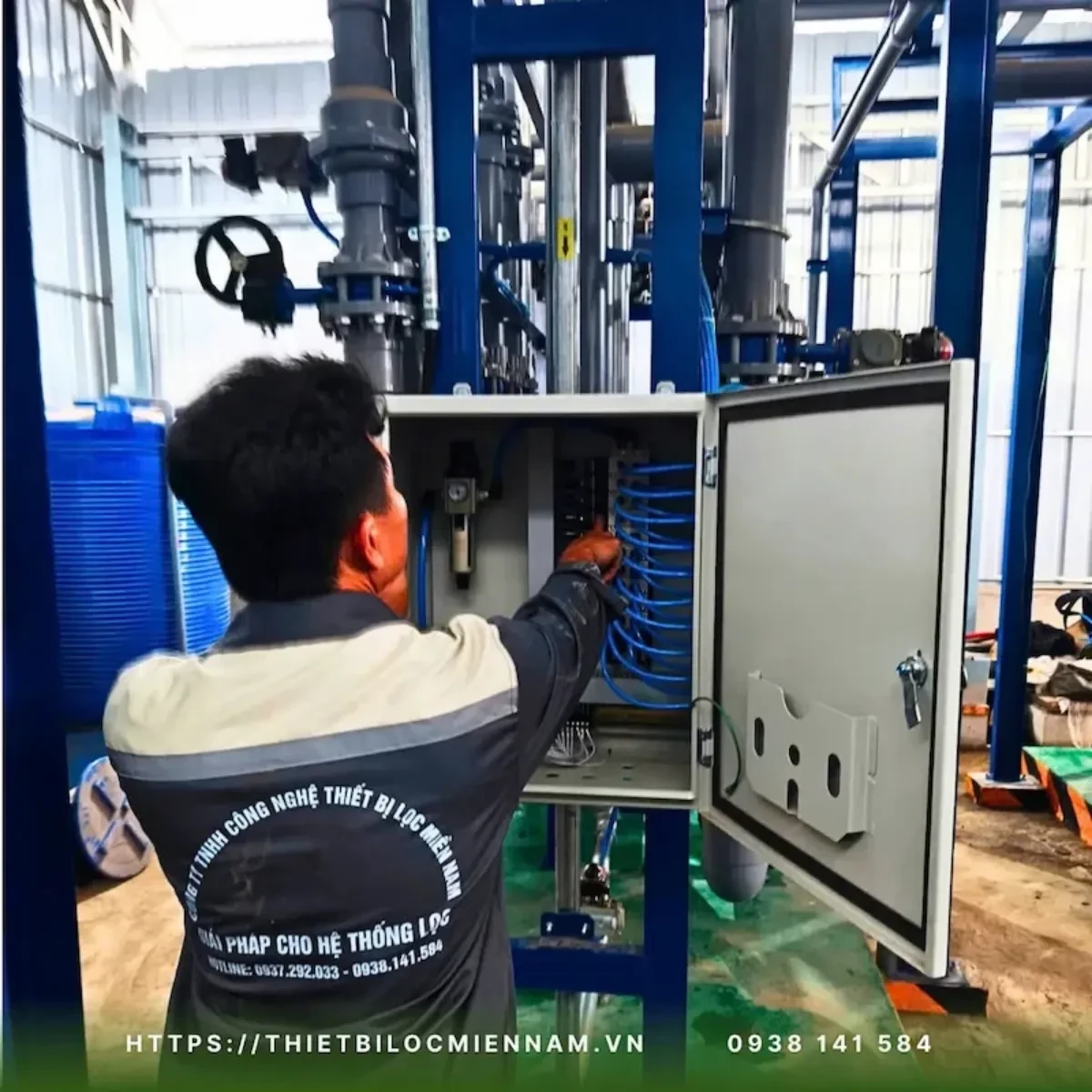
Disadvantages of UF filtration technology
The principle of the UF water filtration system is based on pressure-driven membrane separation. Raw water is pushed through the hollow fiber filter membrane. There are two main modes of operation:
As water moves through the membrane, under pressure, clean water and molecules smaller than the membrane's pore size pass through and collect in the clean water line. Larger molecules, bacteria, and viruses are retained and removed through periodic backwashing to ensure the membrane always remains unobstructed.
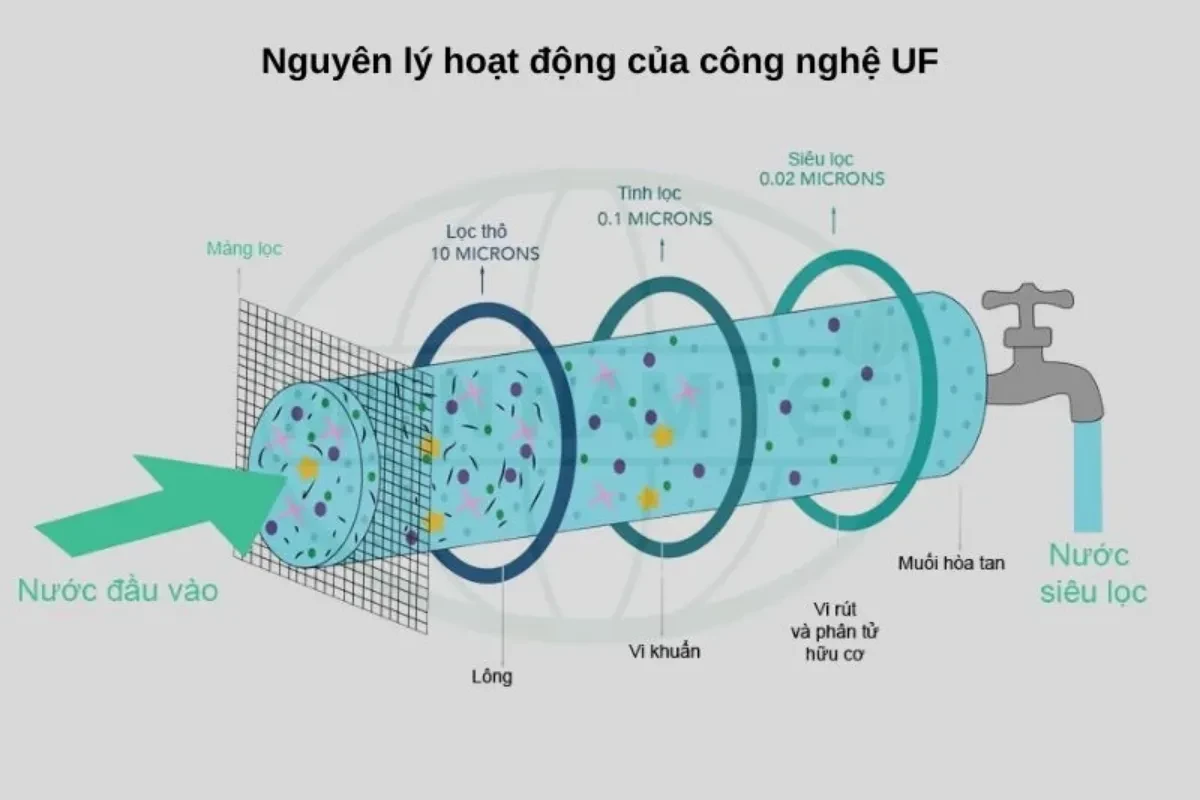
Operating principle of UF water filtration technology
To ensure the UF ultrafiltration system operates stably and achieves maximum lifespan, we design a methodical water treatment process consisting of the following stages:
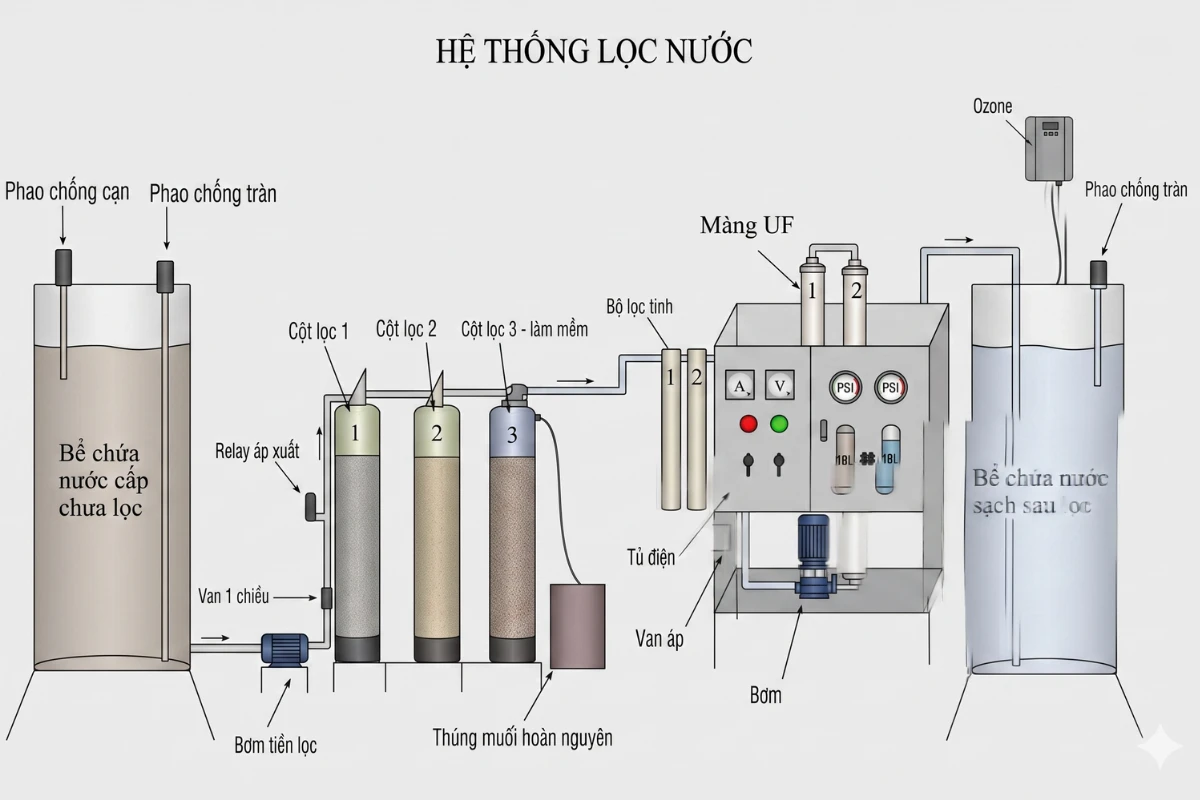
Design drawing of a 30m2/H UF system at Southern Filtration Equipment Technology
For the clearest overview, we provide a detailed comparison table between UF filtration technology and two other common technologies, RO (Reverse Osmosis) and Nano.
Parameter | Ultrafiltration (UF) Technology | Reverse Osmosis (RO) Technology | Nanofiltration (NF) Technology |
|---|---|---|---|
| Nominal Pore Size | 0.01 – 0.1 μm | ~0.0001 μm | ~0.001 – 0.01 μm |
| Target Contaminants | Bacteria, viruses, colloids, suspended solids, organic macromolecules | Removes 99.9% of impurities, including heavy metal ions and dissolved salts (TDS) | Bacteria, viruses, partial removal of heavy metals and multivalent ions |
| Mineral Retention | Fully retains natural dissolved minerals (Ca2+, Mg2+, etc.) | Complete removal (produces purified/demineralized water) | Partial mineral retention |
| Operating Pressure | Low (1.5 – 4.0 bar), energy-efficient | Very High (5.0 – 15.0 bar), high energy consumption | Medium (3.0 – 8.0 bar), moderate energy required |
| Reject Rate | Very low (0 – 5%), nearly negligible | High (40 – 60%), significant water waste | Medium (10 – 20%) |
| Effluent SDI (Silt Density Index) | < 3 (Ideal pretreatment for downstream RO protection) | Not Applicable (N/A) | Typically < 5 |
Choosing a reputable installation unit is a key factor determining the effectiveness of a UF water filtration system. At MIEN NAM FILTER CO., LTD, we commit to:
A UF water filtration system is a smart choice for those seeking clean water that retains minerals and saves resources. However, for the system to achieve maximum effectiveness, combining pre-filtration steps and selecting the right membrane material is mandatory. Southern Filtration Equipment Technology is proud to be a pioneering provider of professional UF ultrafiltration system solutions, serving all scales from residential to industrial.
1. Can water from a UF filtration system be drunk directly?
Answer: Yes, provided the input water source meets domestic standards and the system is fully equipped with pre-filtration steps plus Ozone/UV disinfection. Water after UF filtration at Southern Filtration Equipment Technology is committed to meeting the QCVN 6-1:2010/BYT bottled drinking water standard after the final disinfection step.
2. How often does the UF ultrafiltration membrane need to be replaced?
Answer: The UF membrane's lifespan depends on the quality of the input water and the frequency of flushing. Typically, with water meeting pre-filtration standards, the membrane can be used for 3 to 5 years.
3. Does the UF ultrafiltration system need electricity?
Answer: Industrial systems or large-scale overall filtration systems need pumps to maintain stable flow and pressure. However, power consumption is much lower than an RO system.
4. Why does my UF membrane get clogged quickly?
Answer: The common cause is the lack of a pre-filtration system or an ineffective pre-filtration system (still containing alum sediment, mud). You need to check the coarse filter columns again and set up an automatic membrane flushing mode.
5. Does UF technology remove chlorine odor from tap water?
Answer: The UF membrane only removes particulate matter and microorganisms. To remove chlorine odor and dissolved chemicals, the UF water filtration system needs to be combined with an activated carbon filter column at the pre-treatment stage."
__________________________
𝑪𝒐̂𝒏𝒈 𝑵𝒈𝒉𝒆̣̂ 𝑻𝒉𝒊𝒆̂́𝒕 𝑩𝒊̣ 𝑳𝒐̣𝒄 𝑴𝒊𝒆̂̀𝒏 𝑵𝒂𝒎 - 𝑮𝒊𝒂̉𝒊 𝑷𝒉𝒂́𝒑 𝑪𝒉𝒐 𝑯𝒆̣̂ 𝑻𝒉𝒐̂́𝒏𝒈 𝑳𝒐̣𝒄
📞 0938.141.584 hoặc 0902710518
📩 miennamfilter@locmiennam.com
🔴 Youtube: Công Nghệ Thiết Bị Lọc Miền Nam
🔵 Facebook: CTy TNHH Công Nghệ Thiết Bị Lọc Miền Nam
⚪ Zalo OA: Công nghệ thiết bị lọc Miền Nam
⚫ Tiktok: CN Thiết Bị Lọc Miền Nam
🟢 LinkedIn: MIEN NAM FILTER