


Alum water filtration systems
Water contaminated with alum significantly impacts daily life, production, and directly affects the health of users. Therefore, Alum Water Filtration Systems are a popular choice for many families seeking solutions to current water quality problems in residential and industrial areas. So, what is an alum water treatment system? What are some of the most common alum water treatment systems currently available? Read MIENNAMTEC's article to find out!
1. What is alum-contaminated water?
Alum-contaminated water is water containing high levels of metal salts such as aluminum, manganese, iron, etc. These salts are formed from sulfate anions SO4-2, complex anions SeF4-2, and cations of two metals with different valencies. Alum-contaminated water usually has a foul, fishy odor, a cloudy yellow color, and a slightly sour taste. Regularly using alum-contaminated water can have serious health consequences.
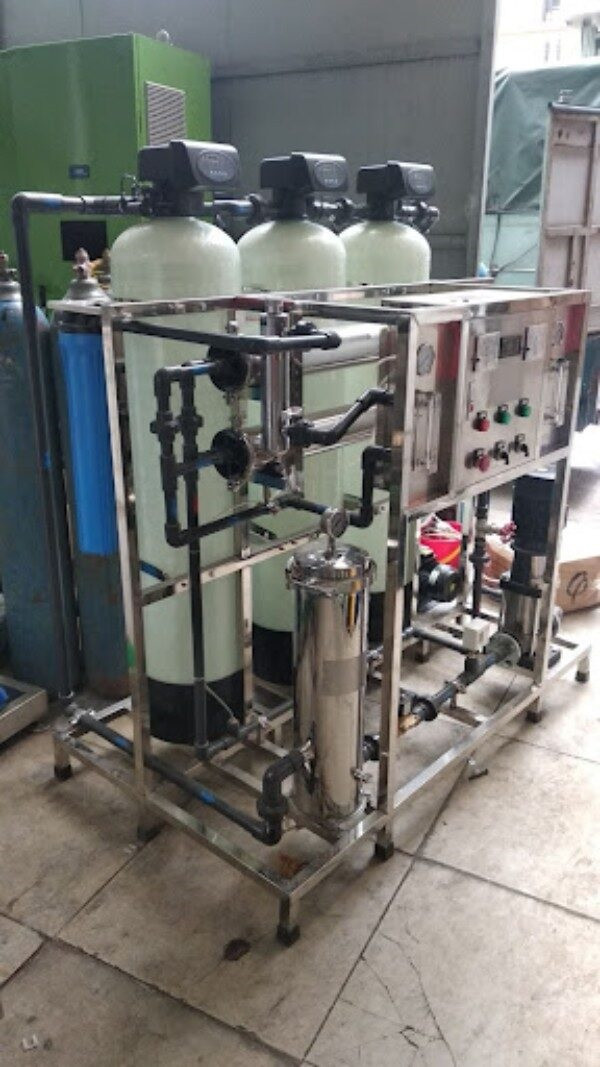
Alum Water Filtration Systems
2. What is a water alum filtration system?
A alum water filtration system is a system for treating well water, water heavily contaminated with alum, etc. The system removes foul odors, suspended organic matter, and impurities from the water, resulting in pure, clean water.
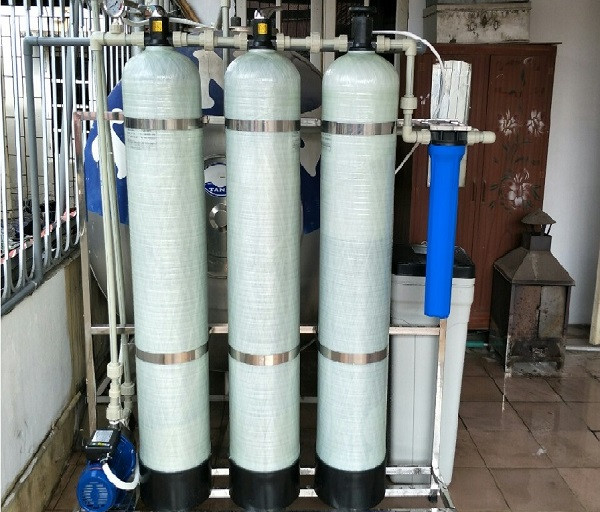
Currently, the most widely used alum water filtration systems in households, factories, and companies are the alum filter column systems, with three main types:
- Alum filtration system using PVC filter columns.
- Alum filtration column using SUS 304 stainless steel filter columns.
- Alum filtration column using composite filter columns.
2.1 Characteristics of the Alum Water Filtration System
Many people wonder about the characteristics of this alum-contaminated water treatment system. MIENNAMTEC will outline the outstanding characteristics of the alum water filtration system as follows:
The filtration system's design is simple yet effective, superior to conventional filtration methods.
The basic capacity of the alum water filter is 1 m³/h.
Easy to operate in 3 steps thanks to its simple structure.
2.2 Advantages of the Alum Water Filtration System
The outstanding advantages of the alum water treatment system will show you that using this product for your family is a completely wise choice. MIENNAMTEC will list the product's advantages below for readers to quickly and accurately grasp the information:
The alum filter column, made from natural materials, provides clean water immediately.
It's cheaper than most other water filtration systems currently available. The cost of replacing the filter cartridges is quite low, and replacement is easy.
It has a backwashing function to remove alum, so the filter media only needs replacing once every 12 years on average.
Some high-flow filter columns use automatic alum flushing valves that operate according to a pre-set schedule. You just need to set the time and no further action is required.
The device can be installed in many locations thanks to its compact and lightweight design.
3. Some Common Methods for Filtering Alum-Contaminated Water
Many effective home water filtration methods for alum contamination are being used by households. These include both traditional methods and modern techniques. To help you understand the most common and simple water filtration methods, MIENNAMTEC will introduce the following four methods.
3.1 Filtration Using Wood Ash
Using wood ash as a material for filtering alum-contaminated water has been very common since ancient times. This is an extremely simple method; with just a few simple steps and readily available materials in the kitchen, you can obtain clean and safe water.
How to filter alum-contaminated water using wood ash:
The amount of wood ash should be in a 1:1 ratio to the number of liters of water to be filtered, calculated in grams and liters of water. For example, 7 liters of water requires 7 grams of wood ash.
Pour wood ash into a basin containing water that needs to be filtered for alum, and let it sit for about 30 minutes.
After the insoluble solids settle to the bottom of the basin, simply separate the clean water from the basin and use it.
3.2 Filtering with lime
Another simple folk method using readily available materials is filtering with lime. This method is similar to filtering water with wood ash. The filtering process is as follows:
Use lime in a 1:1 ratio to the number of liters of water to be filtered, calculated in grams and liters of water. For example, 200 grams for 20 liters of water.
Add the lime to the basin of water to be filtered and let it sit for 30 minutes.
After the insoluble substances settle, separate the clean water.
Note that these two folk methods are only suitable for filtering small volumes of water and cannot guarantee 100% removal of alum. They are not suitable for filtering large volumes of water.
3.3 Using a Coarse Filter Tank
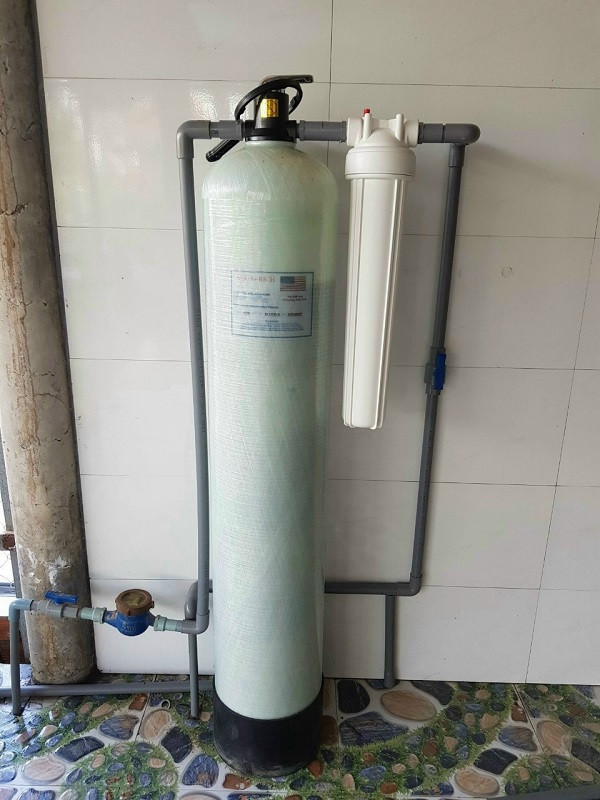
A coarse filter tank ensures cleaner water and can provide a larger supply of filtered water compared to the two traditional filtration methods above. The operation of a coarse filter tank is as follows:
First, construct a filter tank with a capacity suitable for your family's water needs. Alternatively, you can use water storage tanks made of oxidation-resistant materials.
Next, pour a layer of large gravel about 30cm thick at the bottom of the tank and spread it evenly.
The second layer is smaller gravel, evenly spread to a thickness of about 10cm.
The third layer is coarse sand, evenly spread to a thickness of 10cm. With these three layers, sediment will be collected and discharged.
The fourth layer is activated carbon, evenly spread to a thickness of 30cm.
The top layer is clean sand, evenly spread and about 30cm thick.
There will be a space between these layers to hold water. Water slowly seeps through the layers of filter material, then is channeled to the water storage compartment and released into the clean water tank for use.
The limitation of a coarse filter tank is that it requires a fairly large construction area, only suitable for households in rural areas with large yards. In addition, this method only filters 70% to 80% of the dirt and toxins in the water source.
3.4 Using a water purification system for removing alum:
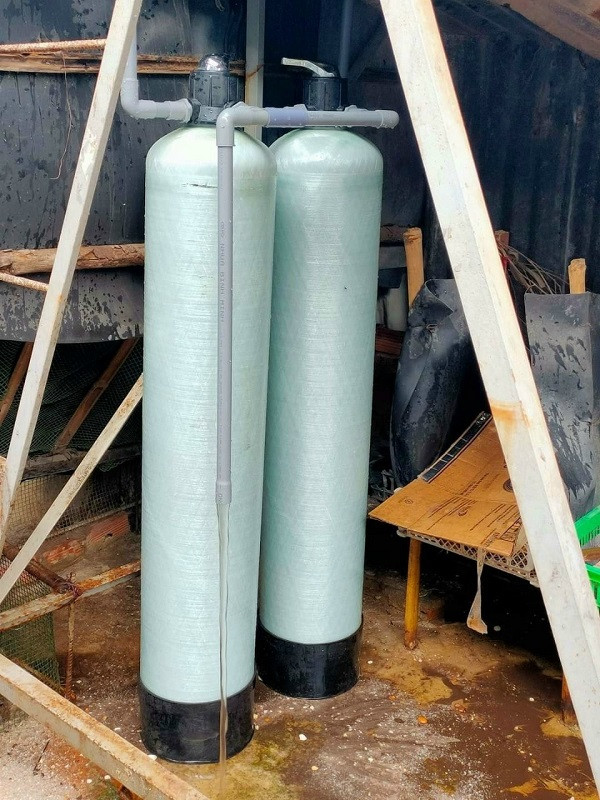
Using a water purifier is currently the most effective way to purify water for households, businesses, companies, etc. This is the most modern method, as well as making water purification quick, time-saving, and ensuring maximum water quality.
There are many types of water purifiers for removing alum, suitable for different needs, all with the common goal of providing sufficient clean water for daily life and production. With the development of modern science and technology, water purifiers are designed to be simple, compact, and can be installed in any location without taking up much space.
This is a popular product used by many families today. Furthermore, the price of this product on the market is not too expensive, suitable for the average spending of Vietnamese families.
See also: Seawater desalination systems
4. Popular Water Filtration Systems for Iron and Sulfate Removal Currently Available
The most popular water filtration systems for iron and sulfate removal currently available include four types: systems for treating lightly contaminated water with iron and sulfate, and systems for treating heavily contaminated water with iron and sulfate.
4.1 System for filtering lightly contaminated water with iron and sulfate
This system uses a manganese sand storage tank and passes the iron and sulfate-contaminated water through it. This is a cost-effective solution while ensuring the water remains safe. It is suitable for well water with mild iron and sulfate contamination, with few impurities, and is used in households.
4.2 System for filtering heavily contaminated water with iron and sulfate
This system integrates a rain shower system and a well water filtration system with specialized materials such as manganese sand, Birm granules, and ODM multi-purpose filter media.
The well water filtration system consists of three filter columns (stainless steel/composite): a sand column, a charcoal column, and an iron and sulfate removal column (containing iron and sulfate removal granules).
Water treated to remove alum can be used for bathing, washing clothes, and watering plants; however, if you want it for drinking, you need to install a UF or RO filter.
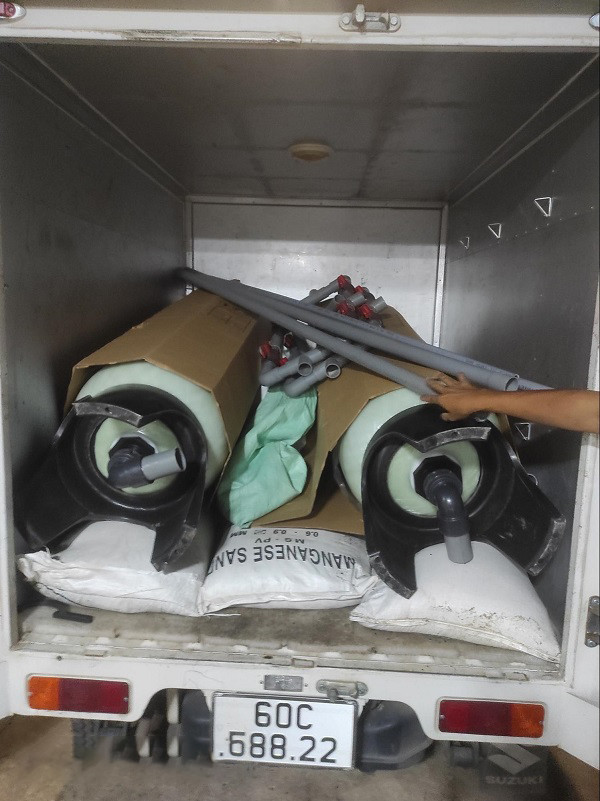
The price of Nano and UF water filtration systems for removing alum is affordable for consumers.
Check this out: How to build a water filtration system to remove alum
Through the information shared above regarding alum water filtration systems, we hope you have gained insight into water filtration methods and modern water filtration systems. For more detailed information about water filtration products, please contact MIENNAMTEC.
__________________________
𝑪𝒐̂𝒏𝒈 𝑵𝒈𝒉𝒆̣̂ 𝑻𝒉𝒊𝒆̂́𝒕 𝑩𝒊̣ 𝑳𝒐̣𝒄 𝑴𝒊𝒆̂̀𝒏 𝑵𝒂𝒎 - 𝑮𝒊𝒂̉𝒊 𝑷𝒉𝒂́𝒑 𝑪𝒉𝒐 𝑯𝒆̣̂ 𝑻𝒉𝒐̂́𝒏𝒈 𝑳𝒐̣𝒄
📞 0938.141.584 hoặc 0902710518
📩 miennamfilter@locmiennam.com
🔴 Youtube: Công Nghệ Thiết Bị Lọc Miền Nam
🔵 Facebook: CTy TNHH Công Nghệ Thiết Bị Lọc Miền Nam
⚪ Zalo OA: Công nghệ thiết bị lọc Miền Nam
⚫ Tiktok: CN Thiết Bị Lọc Miền Nam
🟢 LinkedIn: MIEN NAM FILTER